


From Appraisal to Inventory
Turn More Offers into Acquired Vehicles with this Long-tail ROI strategy
BUILDING YOUR NEW ACQUISITION PROCESS
Trade-in supply is shrinking. Margins are tightening. And affordability continues to reshape buyer behavior.
- Trade-ins now account for just 21% of consumer vehicle sales, down from 32% in 2016. 1
- Nearly 30% of trade-ins carry negative equity, limiting flexibility in the next purchase.2
- Used vehicle gross profit averaged $1,528 per unit, returning to pre-pandemic levels despite elevated prices. 3
At the same time, dealers are operating in a market where declining margins and rising costs require greater efficiency.
The takeaway:
Acquisition is no longer a one-time decision. It is a long-term investment strategy.
This infographic outlines how to build a more disciplined acquisition strategy designed to help you source more trades, improve consistency, and maximize total dealership value.
Step 1: Defining the long-tail ROI of a single trade
Definition:
The long-tail approach means evaluating a trade-in based on its total value to your store—including what it generates over time, not just at the point of acquisition.
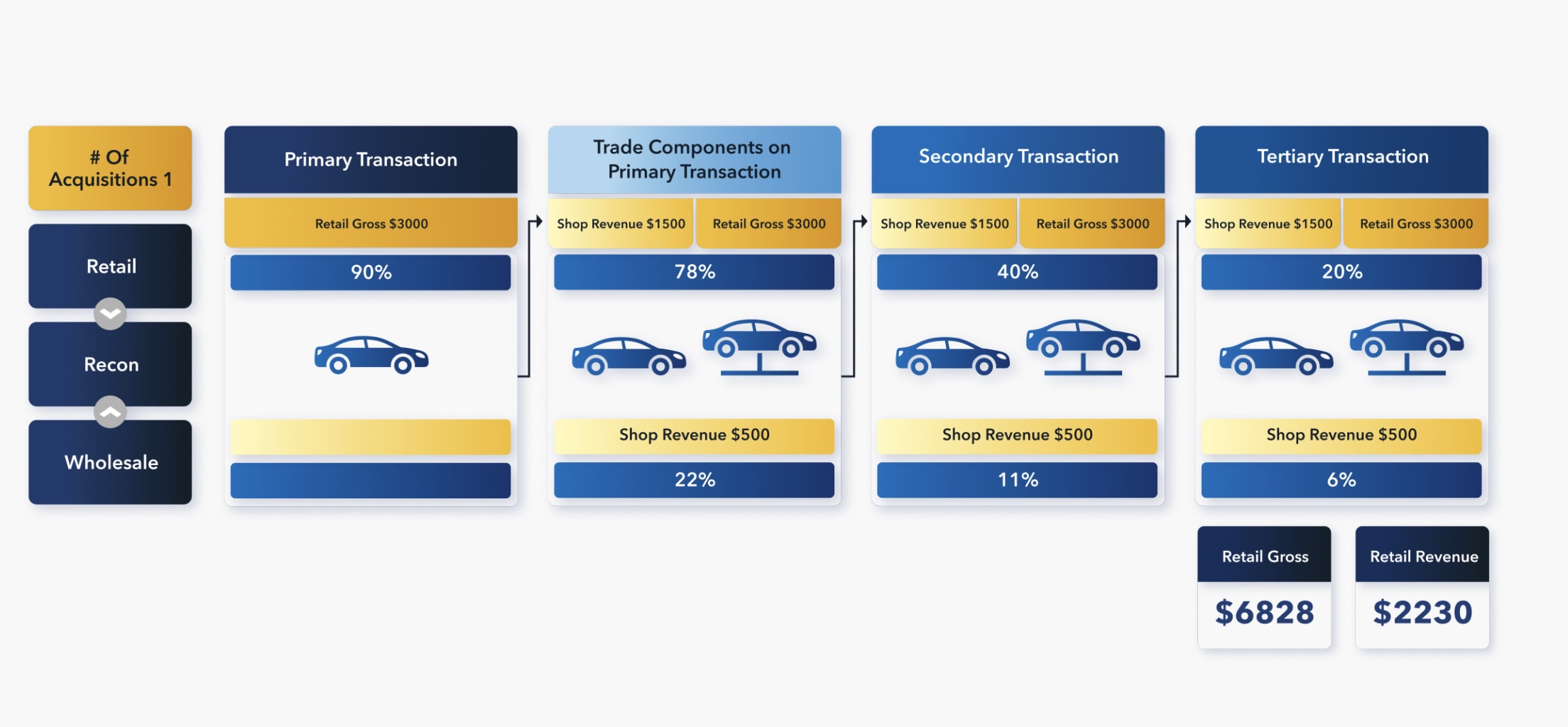
It’s not one vehicle. It’s a chain reaction.
- One acquisition decision influences the next opportunity—and the one after that.
The value compounds over time.
- The right vehicle can create repeat revenue across retail, reconditioning, service, and future trades.
Acquisition decisions shape your inventory strategy.
- What you say “yes” to today determines the mix of vehicles you attract, appraise, and acquire tomorrow.
Not all trades deliver the same long-term value.
- Some vehicles generate a longer tail of demand, turns, and revenue—others do not.
The goal is to identify what drives repeat ROI.
- Look at your acquisition history to understand which vehicles, channels, and decisions consistently produce stronger outcomes.
Which vehicles create a tail of acquisition … a tail of revenue? Which are generating ROI over ROI?
Micah Tindor, AVP of Consumer Vehicle Disposal
Step 2: Overcome used vehicle acquisition biases to win more trades
Overcoming long-standing rules and operating practices can help your team overcome automatic “no” decisions when you encounter older models, high-mileage vehicles, or even brands that don’t fall within your core brand set.
Why this matters:
- In an affordability-constrained market, buyer demand has shifted.
- Older and high-mileage units turn quickly and still generate solid retail profit.
- According to Kelley Blue Book and data from Cox Automotive, average transaction prices (ATP) for new cars have surpassed $50,000, and used car ATPs are climbing, outpacing consumer earnings growth.
Acquisition has become one of the most important disciplines in the dealership. Treating it as an automatic part of the deal is no longer an option.
Micah Tindor, AVP of Consumer Vehicle Disposal
The Full Picture: When You’re Ready for What’s Next
Building a repeatable acquisition strategy requires more than a mindset shift. It takes a solid framework for identifying missed opportunities, evaluating long-tail ROI, and making more consistent acquisition decisions.
Access the full playbook, Used Car Acquisition Strategy: Build a Repeatable Process for Long-Tail ROI, and start building a more consistent appraisal process that helps you identify, acquire, and profit from the right trade-ins.
Sources:
- Source: 2024 Disposer Report
- Source: Edmunds, Q4 2025
- Source: The Q3 2025 Haig Report®
- Kelley Blue Book and data from Cox Automotive featured in Used Car Acquisition Strategy: Build a Repeatable Process for Long-Tail ROI

From Appraisal to Inventory